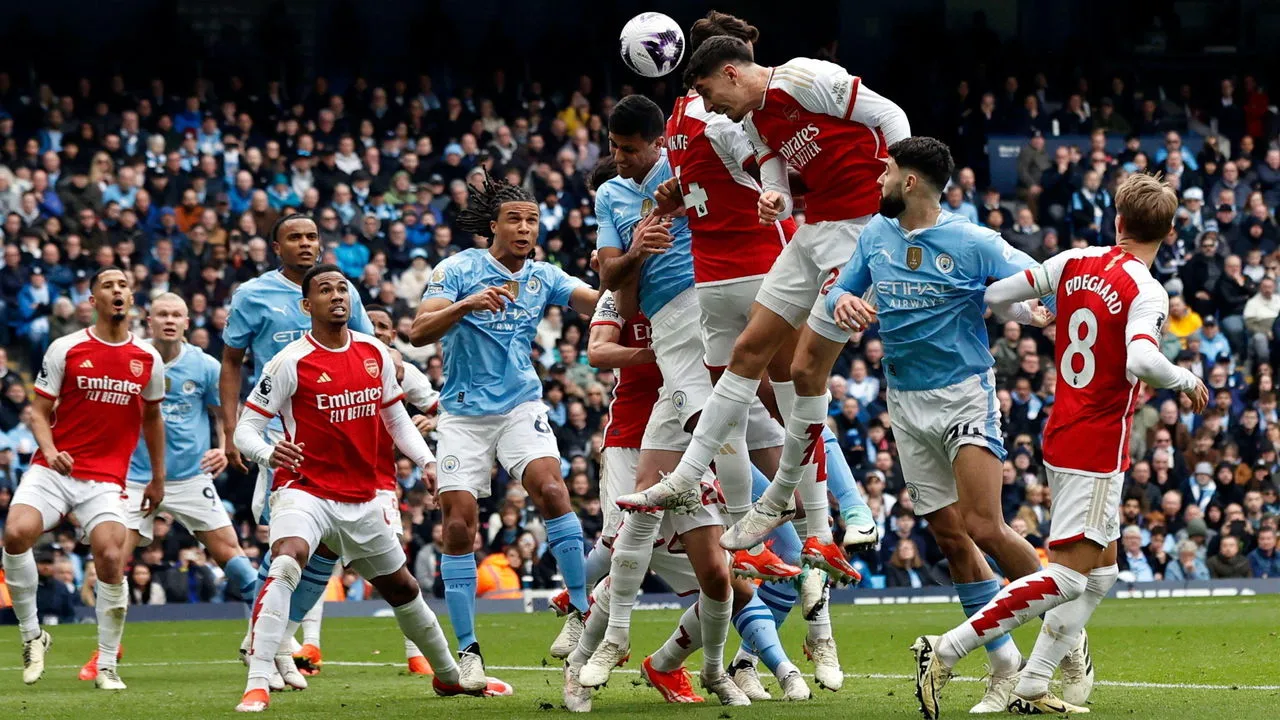
The 2010/2011 English Premier League season remains one of the most volatile and structurally complex campaigns in modern football history. Manchester United claimed the title with a historically low away record, traditional top-four contenders stumbled frequently against lower-half opposition, and the battle against relegation was decided on the final afternoon. For sports bettors, this unprecedented parity generated sharp divergence in outcomes: traditional backing of heavy favorites yielded severe drawdowns, whereas market participants who adjusted for elevated variance unlocked incredible value in underdogs and goal-line markets. Analyzing specific case studies from this campaign reveals the exact mechanical differences between sustained profitability and total capital allocation failure.
The Anomaly of the 2010/11 Campaign: High Parity and Market Inefficiency
Pricing models at the start of the 2010/11 season heavily relied on historical dominance parameters from the mid-2000s, where elite teams routinely accumulated over 85 points. However, squad transitions, congested scheduling, and rising athletic parity across mid-table clubs drastically compressed the performance gap. Bookmakers initially struggled to adjust their implied probabilities, opening up structural mispricings on handicap markets. Bettors who recognized that elite teams were suffering systemic defensive vulnerabilities, particularly on the road, capitalized before the market recalibrated later in the winter.
Case Study 1: The Profitability of Fading Away Favorites in Late 2010
During the autumn of 2010, Manchester United, Arsenal, and Chelsea systematically underperformed on the road relative to their pre-match closing odds. Manchester United won only 5 of their 19 away league matches all season, yet market lines consistently priced them as sub-1.80 decimal favorites during the opening three months. Bettors who utilized Asian Handicap strategies to systematically back home underdogs against top-four visitors accumulated significant yield, capitalizing on the persistent public bias that inflated visitor short-price odds regardless of tactical context.
Strategic Mechanics of Fading Public Bias
To effectively execute a strategy targeting overpriced favorites, a bettor must look beyond raw team prestige and evaluate structural fatigue, tactical match-ups, and home performance metrics. The underlying logic relies on identifying when bookmakers skew odds to balance public volume rather than reflect true statistical probability.
| Match Context (2010/11 Season) | Pre-Match Market Line | Statistical Reality | Strategic Outcome |
| Top-4 Away vs. Mid-Table Home | Away -0.75 or -1.0 | Away Win Rate dropped below 38% | Asian Handicap Home +0.75 high ROI |
| Relegation Contender Home vs. Out-of-Form Elite | Away Short-Price Winner (<1.50) | High draw frequency (30%+) | Double Chance (1X) high yield |
| High-Tempo Mid-Table Clash | Asian Total Over/Under 2.5 | Defensive regression across league | Over 2.5 Goal lines consistently hit |
Analyzing this structural shift demonstrates that bookmakers were slow to discount traditional elite reputation in away fixtures. When market prices maintain short odds despite a dropped win rate, systematic backing of Asian Handicap underdogs secures a positive expected value over a high-volume sample size.
Case Study 2: The Newcastle 4-4 Arsenal Collapse and Live In-Play Misconceptions
On February 5, 2011, Arsenal took a 4-0 lead over Newcastle United at St James’ Park by halftime. In-play betting markets virtually closed, with Arsenal priced as near-certainties. However, a early second-half red card for Abou Diaby combined with Newcastle’s shift to a direct, physical aerial approach completely inverted match momentum. Traders who rigidly held pre-match valuation models suffered massive losses, whereas dynamic in-play bettors who capitalized on high-volatility momentum shifts secured massive payouts on extreme live goal-line options.
Bankroll Disruption: Why Accumulator Strategies Failed Catastrophically
The elevated frequency of draws and upset victories throughout 2010/11 rendered multi-leg parlay or accumulator strategies exceptionally damaging to overall bankroll health. A significant portion of recreational bettors relied on combining three or four heavily favored home teams to build compounded returns. Because even eventual champions Manchester United dropped points in 10 separate away fixtures, multi-leg slips suffered an extraordinarily high failure rate. Single-selection value approaches consistently outperformed parlays by minimizing exposure to unmodeled variance.
The Role of Alternative Wagering Frameworks in High-Volatility Years
Sustaining capital growth during seasons characterized by high team parity requires shifting away from basic match-winner (1X2) bets toward nuanced, risk-controlled markets. Evaluating Asian Handicaps, Draw-No-Bet structures, and alternative totals allows bettors to capture value while maintaining structural protection against late-game variance.
A practical example of this discipline appears when managing long-term capital allocation across dynamic sports and broader digital gaming markets. When sports wagering markets present tight margins or elevated unpredictable variance, disciplined operators often balance their portfolio strategy by exploring alternative digital environments. A bettor seeking broader digital gaming options might evaluate a modern casino online to observe how algorithmic house edges and immediate settlement structures compare against sports variance. This broader perspective highlights why rigid reliance on short-priced favorites invariably fails when market environments experience structural shifts.
Maintaining long-term profitability requires an adaptable approach that actively balances risk profile with shifting market realities. By diversifying exposure across distinct bet types rather than forcing selections on low-margin 1X2 lines, market participants preserve capital during periods when traditional top-tier teams perform unpredictably.
Case Study 3: The Downward Spiral of Chasing Deficits on Relegation Battles
The 2010/11 relegation race featured West Ham, Blackpool, Birmingham City, Wolverhampton, and Wigan all battling survival until the 38th fixture. Bettors who attempted to recover mid-season losses by continuously backing desperate bottom-tier clubs on home-field advantage often suffered severe drawdowns. Birmingham City, for instance, won the League Cup in February but subsequently won only two of their remaining 12 league matches, dropping straight into relegation. Expecting motivation alone to overcome structural squad deficiencies proved to be a costly cognitive trap.
Evaluating Technical Tools and Market Access for Modern Sports Analysts
Navigating dynamic odds movements requires reliable infrastructure capable of delivering real-time pricing updates and flexible market access across diverse sporting events. Sharp market participants rely on robust platforms to track liquidity, execute live hedging decisions, and assess closing-line value before match kickoff.
In scenarios where quick execution and deep market access are paramount for capturing time-sensitive mispricings, choosing the right digital infrastructure becomes essential for execution. An analyst measuring pre-match line movements across Asian leagues or European domestic tournaments often turns to ufabet168 as a benchmark for competitive liquidity and live-market responsiveness. Having access to such platforms ensures that analytical insights can be converted into well-executed positions before market efficiency erodes the edge.
Without fast execution channels and reliable odds tracking, even accurate predictive modeling fails to generate consistent returns. Modern betting strategies demand that analytical precision be matched with optimal execution platforms to secure the best available market prices consistently.
Where Traditional Valuation Models Failed in 2010/11
The primary breakdown of classic predictive models in 2010/11 stemmed from an over-reliance on historical goal differentials rather than rolling underlying performance indicators. Models failed to account for defensive regression across top-tier squads, which saw teams like Chelsea concede uncharacteristic late goals to mid-table opposition. Furthermore, home-field advantage statistics across the league rose unexpectedly, with bottom-half teams claiming far more points against top-six opponents at home than in the preceding five years.
Summary
The 2010/11 Premier League season serves as a masterclass in how structural league parity disrupts traditional betting frameworks. High-yielding portfolios that year succeeded not by predicting individual match outcomes with absolute certainty, but by identifying systemic market mispricings—specifically by fading overpriced away favorites and leveraging Asian Handicap protections. Conversely, severe capital drawdowns were suffered by bettors relying on multi-leg accumulators, emotional chasing on relegation-threatened teams, and static pre-match valuations that failed to adjust for in-game structural shifts. The enduring lesson of 2010/11 is that long-term betting success requires continuous model recalibration, disciplined bankroll management, and an unyielding commitment to objective probability over historic team reputation.