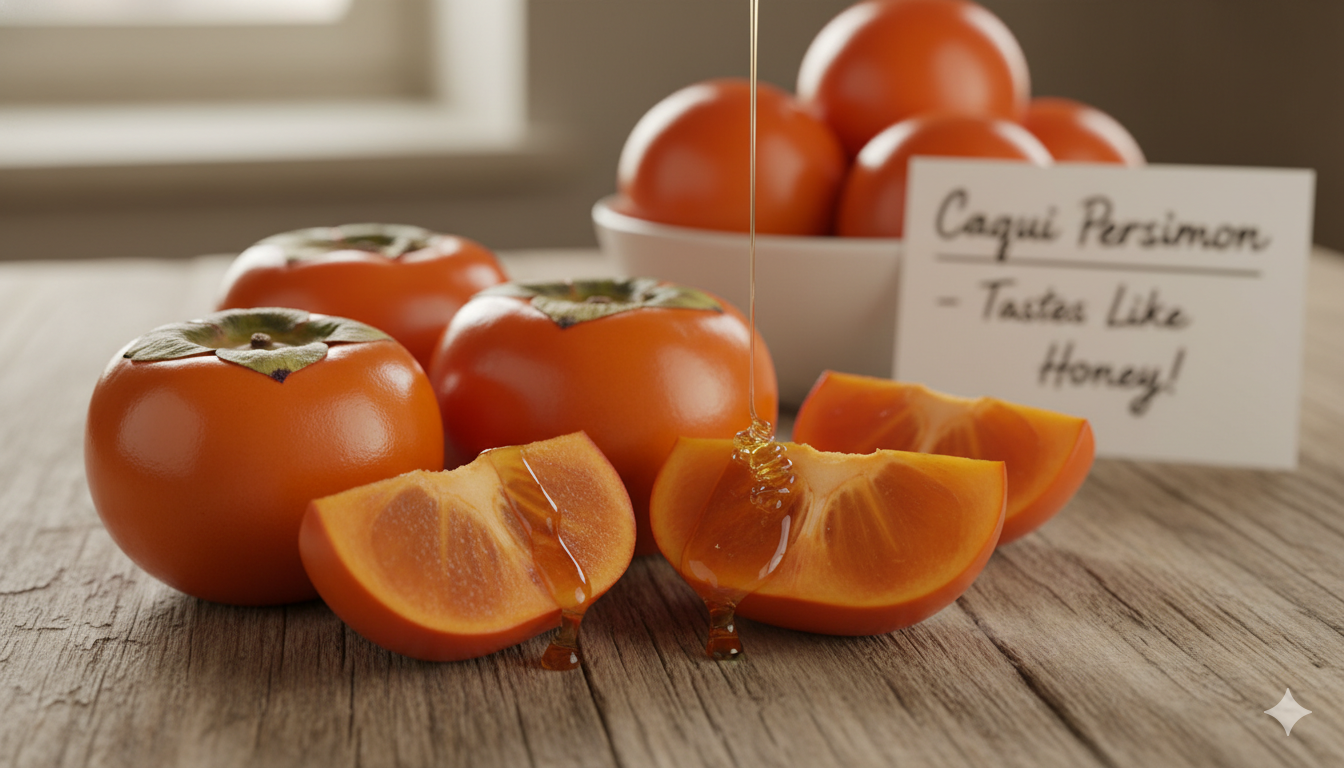
Have you ever seen a bright orange fruit that looks like a tomato but tastes like honey? That is a Caquis Persimon! These fruits are very special because they are firm like an apple but sweet like a candy. Many people love them because they do not have the sour or “fuzzy” feeling that some other fruits have. They grow on beautiful trees and turn a deep orange color when they are ready to be picked. Because they are easy to hold and eat, they have become a favorite snack for kids and adults all over the world.
A Quick Look at Caquis Persimon
| Feature | Details |
| Common Name | Caquis Persimon (Rojo Brillante) |
| Scientific Name | Diospyros kaki |
| Origin | Originally from Asia, now famous in Spain |
| Texture | Firm, crisp, and crunchy |
| Taste | Sweet, mild, and honey-like |
| Best Season | October through January |
| Skin Color | Bright orange to deep red-orange |
Why People Love This Sweet Fruit
The caquis persimon is famous because it is “astringency-free.” In simple words, that means it does not make your mouth feel dry or weird when you bite into it. In the past, some persimmons had to be very soft and mushy before you could eat them. If you ate them too early, they tasted bitter. But the caquis persimon is different! Farmers found a natural way to remove that bitterness while keeping the fruit firm. Now, you can slice it up just like a pear and enjoy the crunch.
The Best Way to Pick a Good One
When you go to the grocery store, looking for the perfect caquis persimon is like a fun game. You want to find one that feels heavy for its size. The skin should be very smooth and shiny, almost like it was polished. If you see a few small brown freckles on the skin, do not worry! Those are often “sugar spots,” which mean the fruit is extra sweet inside. Avoid any fruits that have deep bruises or soft mushy spots, as those might be overripe.
How to Eat Your Caquis Persimon
Eating a caquis persimon is incredibly easy because there are no seeds to worry about! You can eat it just like an apple by washing the skin and taking a big bite. Some people like to peel the skin off with a knife, but the skin is perfectly safe and crunchy to eat. You can slice it into wedges for a lunchbox or dice it into small cubes to put on top of your morning cereal. It is a very “clean” fruit because it isn’t drippy or messy like an orange.
Health Benefits for Growing Kids
Is a caquis persimon healthy? Yes, it is a powerhouse of vitamins! It is loaded with Vitamin A, which helps you see better in the dark, and Vitamin C, which keeps your immune system strong so you don’t get sick. It also has a lot of fiber. Fiber is like a tiny broom for your tummy that keeps everything moving smoothly. Choosing this fruit instead of a candy bar gives your body the energy it needs to play and learn all day long without a sugar crash.
Where Do These Fruits Grow?
While these fruits started in Asia a long time ago, the most famous caquis persimon comes from a sunny place in Spain called the Ribera del Xúquer valley. The warm sun and the nice soil there make the fruits grow very large and sweet. Farmers there take great care of the trees. They wait until the fruit is just the right color before they pick them by hand. This ensures that every piece of fruit sent to the store is high quality and ready for you to enjoy.
Fun Ways to Use Them in Recipes
You can do more than just snack on a plain caquis persimon. Try chopping one up and mixing it into a bowl of yogurt with a little bit of cinnamon. It tastes like a fancy dessert! Some families like to put slices of this fruit into a green salad to add a sweet crunch. You can even bake them in the oven with a tiny bit of honey to make a warm treat for a cold winter night. They are very versatile in the kitchen.
Store Your Fruit the Right Way
If your caquis persimon is still a little bit hard, you can leave it on your kitchen counter for a day or two. It likes the room temperature! Once it is perfectly ripe and sweet, you can move it into the refrigerator to keep it fresh for longer. It will usually stay crunchy and delicious for about a week in the fridge. Just make sure not to put heavy things on top of them, or they might get bruised and lose their pretty shape.
The Difference Between Varieties
You might see other types of persimmons at the market, like the Hachiya or the Fuyu. The Hachiya is shaped like a heart and must be very soft before eating. The Fuyu is short and flat. But the caquis persimon is usually larger and more oval-shaped. It is specifically treated to be hard and sweet at the same time. This makes it the most convenient choice for people who want a quick snack without waiting for the fruit to turn into mush.
Why This Fruit is a Seasonal Treat
The caquis persimon only shows up in stores during the late autumn and early winter. This makes it a very special “seasonal” treat. It is often associated with the holiday season because of its beautiful bright orange color. Seeing them in the store is a sign that the weather is getting cooler and the cozy months are here. Since they aren’t around all year, people get very excited to buy them while they are fresh and in season.
Conclusion: Give It a Try!
The caquis persimon is a wonderful, crunchy, and honey-sweet gift from nature. It is packed with vitamins, easy to pack in a bag, and tastes absolutely delicious. If you have never tried one before, look for that bright orange glow in the fruit aisle next time you go shopping. It might just become your new favorite healthy snack! Have you ever tried a persimmon before? Go grab one and see how sweet and crunchy it really is.
Frequently Asked Questions (FAQs)
1. Do I need to peel a caquis persimon?
No, you do not have to peel it! The skin is thin and edible, just like an apple. However, if you prefer a softer texture, you can use a vegetable peeler to remove it.
2. Does the fruit have seeds?
Most caquis persimon fruits are seedless, which makes them very easy for children to eat safely. Occasionally you might find a tiny soft seed, but it is very rare.
3. What does it taste like?
It has a very mild and sweet flavor. Some people say it tastes like a mix between a peach, a pear, and a drop of honey. It is not sour at all.
4. Is it okay if the fruit is hard?
Yes! This specific type is meant to be eaten while it is firm and crunchy. It is not like other persimmons that have to be soft like jelly.
5. How many calories are in one?
A medium caquis persimon has about 120 calories. It is a great way to satisfy a sweet tooth while getting healthy fiber and vitamins.
6. Can I cook with it?
Absolutely! You can use it in muffins, salads, or even roast it with meats. It holds its shape well even when it gets hot in the oven.