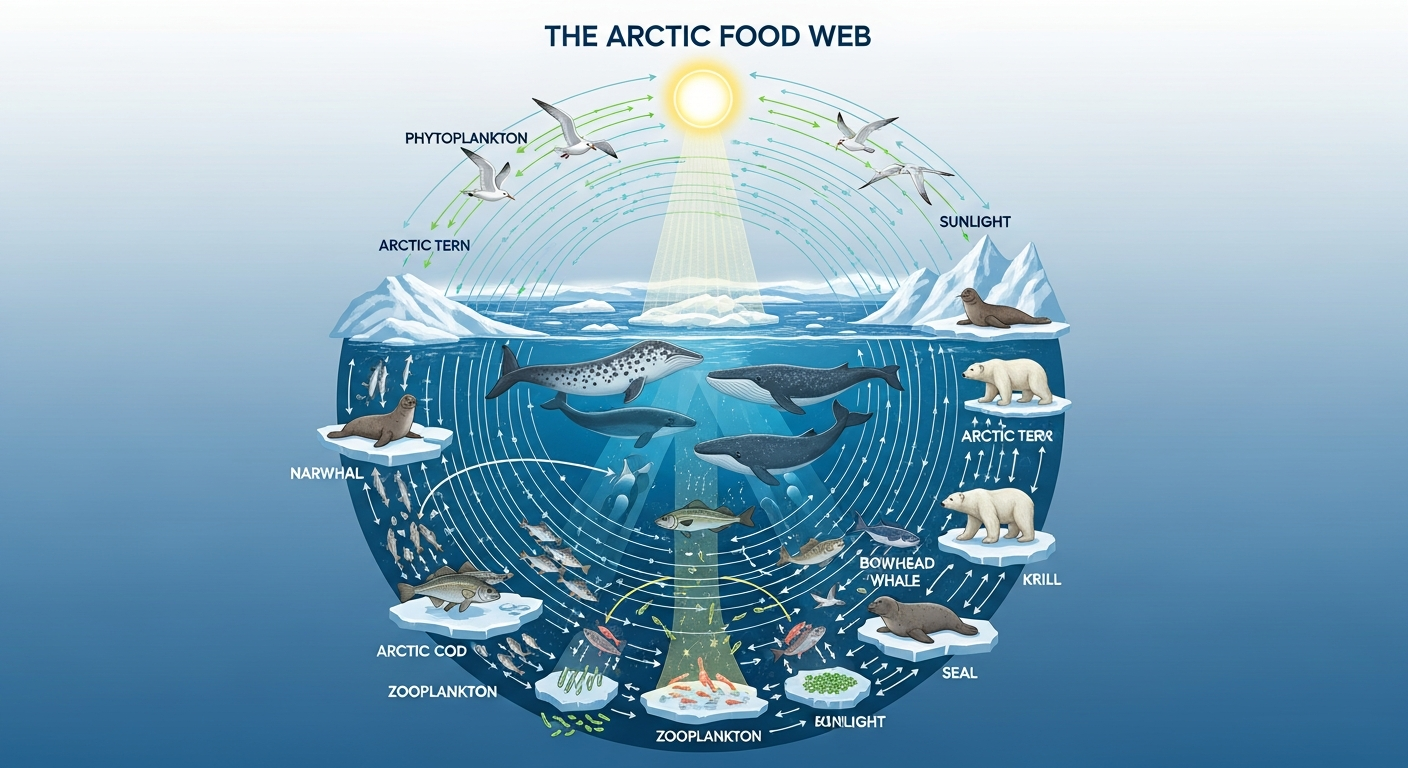
The Arctic Food Web is like a big circle of eating and being eaten. It shows how energy moves from tiny plants to huge predators. In the Arctic, everything depends on the cold sea, ice, and sunlight. Even small animals like plankton help feed giant animals like whales.
You’ll learn about arctic food web producers, consumers, and decomposers, and you’ll see simple arctic food web examples. We’ll also explain why the Arctic food web diagram matters and how climate change affects the whole system. By the end, you’ll understand the arctic food web like a scientist!
What Is the Arctic Food Web?
The arctic food web is a network of animals and plants that depend on each other for food. It starts with tiny producers, like algae, that make energy from sunlight. Then, small animals eat the producers, and bigger animals eat the smaller ones.
Unlike a food chain, which is a straight line, the arctic food web shows many connections. For example, seals eat fish, but orcas eat seals. This makes the web strong and flexible. If one animal disappears, others may struggle. That’s why every part of the arctic food web is important.
Arctic Food Web Diagram: How It Looks
A typical arctic food web diagram starts with the sun at the top. Next are producers, like algae and sea ice plants. Then come tiny animals, such as zooplankton, which eat the producers. Small fish eat zooplankton, and bigger fish eat small fish.
Finally, top predators like polar bears and killer whales sit at the top. The diagram also shows arctic food web decomposers, like bacteria and fungi, which break down dead animals and return nutrients to the soil. This keeps the web alive and healthy.
Producers in the Arctic Food Web
Producers are the base of the arctic food web. They make their own food using sunlight through photosynthesis. In the Arctic, the main producers are algae, phytoplankton, and tiny plants living in sea ice.
Even though they are small, they create most of the energy in the Arctic. Without them, the food web would collapse. That’s why arctic food web producers are so powerful. They are like the engine of the entire ecosystem.
| Image | Role | Examples | What They Do | Why They Matter |
|---|---|---|---|---|
 |
Producers | Algae, Phytoplankton, Sea Ice Plants | Create food using sunlight (Photosynthesis) | Start the energy chain of the arctic food web |
|
Primary Consumers | Zooplankton, Krill, Small Fish | Eat producers to gain energy | Provide energy for larger animals |
|
Secondary Consumers | Larger Fish, Seals | Eat primary consumers | Maintain balance in the food web |
|
Tertiary Consumers | Polar Bears, Orcas | Top predators that eat other consumers | Keep the arctic food web balanced |
|
Decomposers | Bacteria, Fungi | Break down dead matter | Return nutrients to the ecosystem |
Consumers in the Arctic Food Web
Arctic food web consumers are animals that eat producers or other animals. There are three types:
- Primary consumers (eat producers), like zooplankton and small fish.
- Secondary consumers (eat primary consumers), like bigger fish and seals.
- Tertiary consumers (top predators), like polar bears and killer whales.
Every consumer helps keep the arctic food web balanced. If one animal grows too many, it can harm the rest of the web.
Examples of a Simple Arctic Food Web
Here are simple arctic food web examples to help you understand:
- Example 1: Algae → Zooplankton → Small Fish → Seals → Polar Bears
- Example 2: Phytoplankton → Krill → Whales → Orcas
These examples show how energy moves from tiny producers to huge predators. When you look at the arctic food web, you’ll notice many animals can fit into different paths.
Arctic Food Web Decomposers: The Hidden Helpers
Arctic food web decomposers are often unseen but very important. They include bacteria, fungi, and small insects that break down dead plants and animals.
When a whale dies, decomposers eat its body and return nutrients to the water and soil. These nutrients feed algae and start the web again. Without decomposers, dead matter would pile up, and producers would starve. They are the cleanup crew of the arctic food web.
Why the Arctic Food Web Is Unique
The Arctic is colder and harsher than many other places. That means the arctic food web has fewer types of plants and animals. But the animals there are strong and well-adapted.
Sea ice is a big part of the system because it supports algae, seals, and polar bears. When ice melts, the entire web changes. That is why scientists watch the arctic food web closely to understand climate change and survival.
How Climate Change Affects the Arctic Food Web
Climate change is warming the Arctic faster than other regions. This affects the arctic food web in many ways.
When sea ice melts, algae and ice plants lose their home. That reduces food for zooplankton and small fish. If small fish decline, bigger fish and seals suffer. Eventually, even polar bears and orcas can be affected.
This shows how fragile the arctic food web is and why protecting it matters.
Real-Life Example: The Polar Bear’s Role
Polar bears are a key part of the arctic food web. They mainly eat seals and help control seal populations.
If polar bears disappear, seal numbers could grow too much, which would affect fish and other animals. This is why polar bears are called “top predators.” They keep the web balanced. When we protect polar bears, we protect the entire arctic food web.
Arctic Food Web: What You Can Do to Help
You can help protect the arctic food web by learning and spreading awareness. Simple actions include reducing energy use, supporting clean energy, and choosing sustainable products.
Even small steps can make a big difference. When we reduce pollution and climate change, we help keep sea ice stable. That protects producers, consumers, and decomposers in the Arctic.
FAQs
1. What is an arctic food web?
An arctic food web is a network of organisms that eat each other in the Arctic ecosystem. It shows how energy flows from producers to predators.
2. What are the main producers in the Arctic?
The main arctic food web producers are algae, phytoplankton, and sea ice plants. They use sunlight to make food.
3. Who are the top predators in the Arctic?
Top predators include polar bears, killer whales, and large seals. They sit at the top of the arctic food web.
4. Why are decomposers important in the arctic food web?
Arctic food web decomposers break down dead plants and animals. They recycle nutrients and keep the ecosystem healthy.
5. How does climate change affect the arctic food web?
Climate change melts sea ice, which reduces habitats for producers and disrupts the entire arctic food web.
6. Can humans help protect the Arctic food web?
Yes! By reducing pollution, supporting clean energy, and protecting wildlife, humans can help keep the arctic food web strong.
Conclusion: The Arctic Food Web Is Fragile but Strong
The arctic food web is a powerful system that depends on every living thing, from tiny algae to giant polar bears. When one part weakens, the whole web can change. That is why understanding the arctic food web is so important.
By learning about arctic food web producers, consumers, decomposers, and simple examples, we can appreciate how life survives in the cold Arctic. If you found this helpful, share it with friends or ask more questions. Together, we can protect this amazing ecosystem.