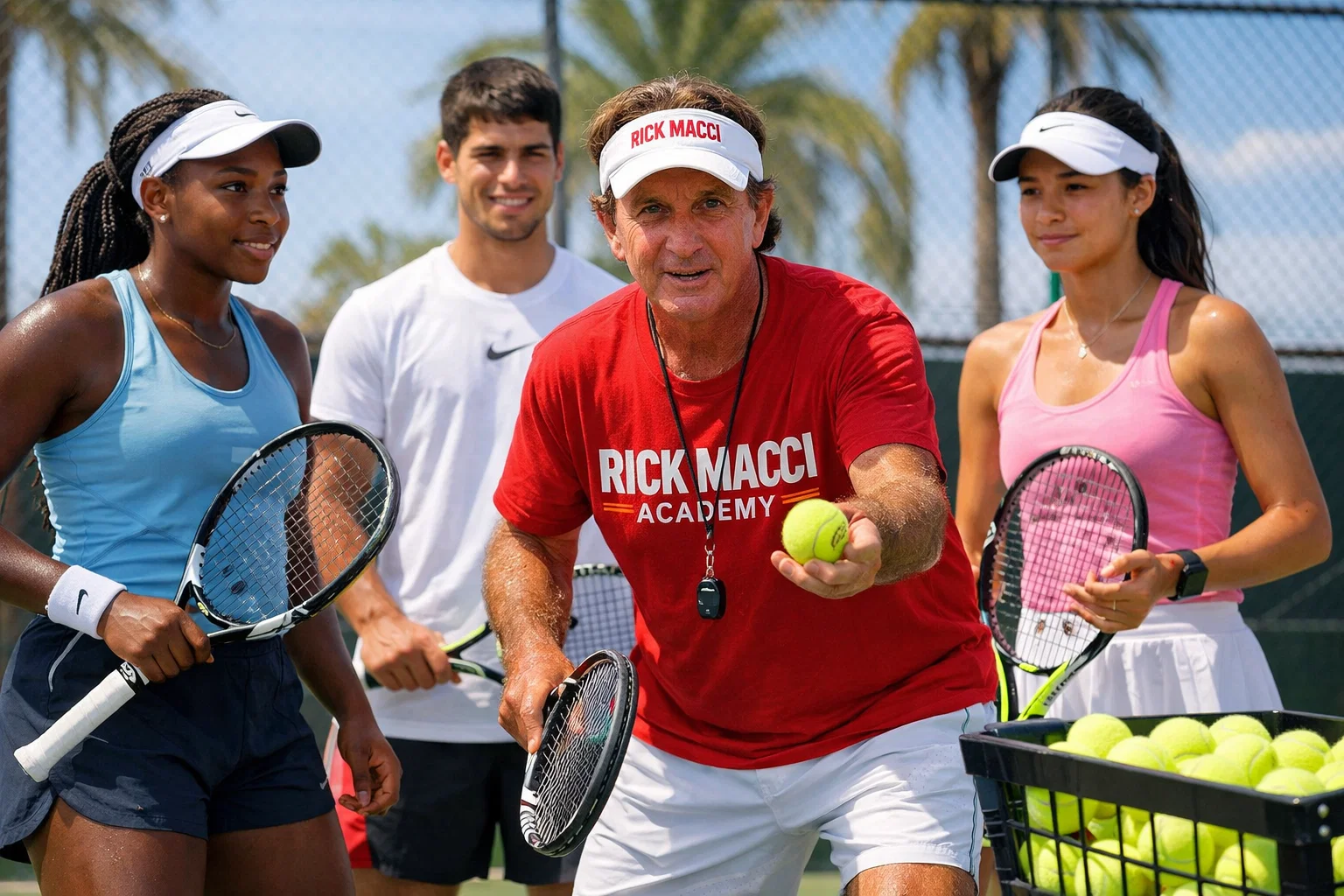
When most people think of tennis, names like Venus and Serena Williams, Andy Roddick, or Maria Sharapova often come to mind. But behind these stars is a coach whose influence is quietly monumental: Rick Macci. For decades, he has nurtured young talents, shaped careers, and developed an almost uncanny sense of when a player is ready to take the next step. Watching interviews, reading biographies, and observing his students, it becomes clear that Macci is not just a technician—he is a teacher who treats tennis as a life-long lesson, not just a sport.
Early Life and Path to Coaching
Growing Up in Ohio
Rick Macci was born in Greenville, Ohio, in December 1954. From a young age, he was passionate about sports, but tennis became his true calling. He played competitively as a teenager, learning not just the technical aspects of the game but also the mental toughness required to succeed. These early experiences shaped his philosophy: talent alone is not enough. Discipline, mindset, and adaptability are equally important.
The Transition to Coaching
Macci began coaching in his early twenties, quickly developing a reputation for spotting potential in young players. Unlike many coaches who focus only on technique, he emphasizes understanding the individual—both their strengths and weaknesses. This approach allowed him to attract highly talented juniors who later became household names in tennis.
Coaching Philosophy
Technique and Precision
One of the hallmarks of Rick Macci’s training is attention to technical detail. From footwork to grip adjustments, he ensures every move is efficient. However, he avoids overloading students with instructions. Instead, he focuses on incremental improvements that feel natural, helping players internalize skills rather than memorize them.
Mental Strength and Competition
Macci often says that tennis is 90% mental. His sessions include not just drills but also simulated match pressures. For example, he frequently encourages players to compete in mini-tournaments among themselves, fostering resilience and adaptability. Many of his students have cited this as a turning point in their development, helping them perform under stress in real competitions.
Personalized Coaching
Every athlete is unique, and Macci understands that. He tailors sessions based on the player’s physical abilities, mental makeup, and personal goals. This personalized approach is a key reason why so many elite players, including Venus and Serena Williams, have thrived under his guidance.
Legendary Students
Venus and Serena Williams
Few coaches can claim to have worked with multiple world number ones, yet Rick Macci did just that. He trained Venus and Serena Williams during their formative years, helping them develop their signature power, footwork, and mental toughness. His emphasis on consistency and adaptability became foundational in their rise to dominance.
Andy Roddick and Maria Sharapova
Macci also played a significant role in developing the skills of Andy Roddick and Maria Sharapova. With Roddick, he focused on maximizing serve speed while maintaining control. For Sharapova, the emphasis was on aggressive baseline play and mental resilience. These tailored approaches highlight his ability to see each player’s unique potential.
Other Notable Players
Rick Macci has trained several other top juniors and professionals, demonstrating a consistent pattern of nurturing talent that could excel internationally. His influence is seen in how players handle pressure, adapt strategies mid-game, and maintain peak performance throughout long careers.
Training Methods
Focus on Fundamentals
Macci insists that even the most gifted players must master fundamentals. Footwork, balance, swing mechanics—he drills these relentlessly but creatively, using exercises that are challenging yet enjoyable. This ensures that skills are solid under pressure, which is critical in high-stakes matches.
Simulated Pressure Scenarios
Another interesting aspect of his coaching is the use of real-life match scenarios. He recreates high-pressure moments in practice, like tiebreakers or match points, to train players’ responses. This prepares athletes to stay calm and execute under stress, which often makes the difference between winning and losing.
Home Advice Decadgarden Practical Living Smart Decor Garden Tips Guide
Hands-On Feedback
Unlike some coaches who rely on verbal instruction alone, Macci frequently uses demonstration. He will show the correct motion, adjust the player physically, and then allow them to feel the movement. This hands-on approach accelerates learning and reduces mistakes in actual competition.
Influence Beyond the Court
Mentorship and Life Lessons
Macci’s impact extends beyond technical skills. He teaches discipline, focus, and resilience—qualities that benefit students both on and off the court. Many former players credit him not just for tennis success but for personal growth, emphasizing how lessons in persistence and adaptability shaped their overall character.
Media and Public Recognition
While he rarely seeks the spotlight, Macci’s methods and successes have been highlighted in documentaries and films, most notably King Richard. These portrayals showcase his role in shaping champions while maintaining his philosophy of individualized, patient coaching.
Legacy and Ongoing Work
Continuing to Train New Generations
Even in his seventies, Rick Macci remains active in coaching, mentoring both professional athletes and promising juniors. He emphasizes quality over quantity, often keeping sessions one-on-one to ensure focused, personalized guidance.
Influence on Modern Tennis
His coaching philosophy has influenced modern tennis training methods. The combination of technical precision, mental conditioning, and adaptive strategies is now considered a standard in elite coaching. Macci’s students, past and present, continue to set benchmarks for excellence in the sport.
Common Questions About Rick Macci
1. How did Rick Macci discover the Williams sisters?
He noticed their talent early in their backyard sessions and guided them with personalized training tailored to their strengths.
2. Has Macci coached players other than world champions?
Yes, he has trained numerous juniors and professionals who later succeeded in national and international competitions.
3. What is his teaching style like?
Hands-on, personalized, and focused on both technical mastery and mental resilience.
4. Is Macci still coaching today?
Yes, he continues to mentor players individually, emphasizing quality and attention to each athlete’s needs.
5. How does Macci approach mental toughness?
Through simulated pressure situations, consistent practice under stress, and cultivating focus and resilience.
Conclusion
Rick Macci is more than just a coach; he is a mentor, strategist, and builder of champions. His unique combination of technical expertise, mental coaching, and personal attention has shaped some of the most successful tennis careers in history. Beyond trophies and rankings, his real legacy is the lessons he imparts—about discipline, perseverance, and the value of patience—that extend far beyond the tennis court.